From Student to Teacher: Understanding Pilates Instructor Training and Certification at Sandy Greiner Pilates
You’ve just finished your first Pilates class. You’re rolling up your mat, feeling strong, stretched, and a little taller, even. You love this feeling and can’t wait to come back and do it again. If you were a Pilates teacher, you’d not only reap the benefits of the workout, but you’d also be helping others feel their best as well. Many current Pilates instructors started as enthusiastic students who wanted to take their practice to the next level and help others discover the joy of movement. The journey from participant to professional involves structured education, hands-on practice, and a deep understanding of movement science.
In this article, we’ll explore how Pilates instructor training works, what it takes to earn a Pilates certification, and how comprehensive education shapes confident instructors. We’ll also highlight the experienced team at Sandy Greiner Pilates and the credentials that make their teaching exceptional.
Whether you’re considering a new career or are simply curious about what goes into becoming a Pilates instructor, we’ll lay out everything you should know.
What Does Pilates Instructor Training Entail?
At its core, Pilates instructor training is a structured educational pathway that teaches students how to guide others through safe, effective movement. While many people assume teaching Pilates is simply about knowing exercises, professional instruction also involves anatomy, biomechanics, and being able to tailor the practice to individual students.
A comprehensive Pilates instructor training program typically includes:
Functional anatomy and movement science
Exercise technique and alignment principles
Client assessment and modification strategies
Equipment-based instruction
Hands-on teaching practice
Observation hours
Students learn not only how to perform exercises but also how to evaluate posture, identify muscular imbalances, and adapt movements for various bodies and abilities.
Many programs require hundreds of training hours, combining coursework with supervised practice. This thoroughness helps ensure instructors can support their clients safely and effectively across a wide range of fitness levels.
The Path to Pilates Certification
After completing their coursework, trainees pursue official Pilates certification, which validates their knowledge and teaching ability, and lets students know they’re in great hands.
A typical pathway toward Pilates certification includes:
1. Foundational Coursework
Students complete classroom and practical training that covers Pilates principles, equipment, and teaching methodology.
2. Practice Teaching
Trainees gain real-world experience working with clients under the supervision of experienced teachers.
3. Written and Practical Exams
Formal assessments evaluate technical knowledge and teaching skills.
4. Continuing Education
Many organizations require ongoing education to maintain Pilates certification to help instructors stay current with movement science and best practices. As a Pilates instructor earns more credentials, they become more established as a teacher and better able to help their students achieve their health and wellness goals.
Comprehensive vs. Specialized Programs
Not all training programs are identical. Some focus on a single modality, while others offer comprehensive education covering the full Pilates system.
Comprehensive Certification
A comprehensive Pilates instructor certification includes training on all major Pilates apparatus and teaching techniques. This approach prepares instructors to work with diverse populations and conditions.
Mat Certification
Mat-only programs focus on floor-based exercises and typically require fewer training hours.
Equipment Specialization
Some trainees pursue advanced education in specialty areas, such as rehabilitation or athletic conditioning. Many Pilates studios prioritize instructors with a full Pilates instructor certification, as it demonstrates competency across an array of methods and equipment.
Understanding Reform Training and Equipment Education
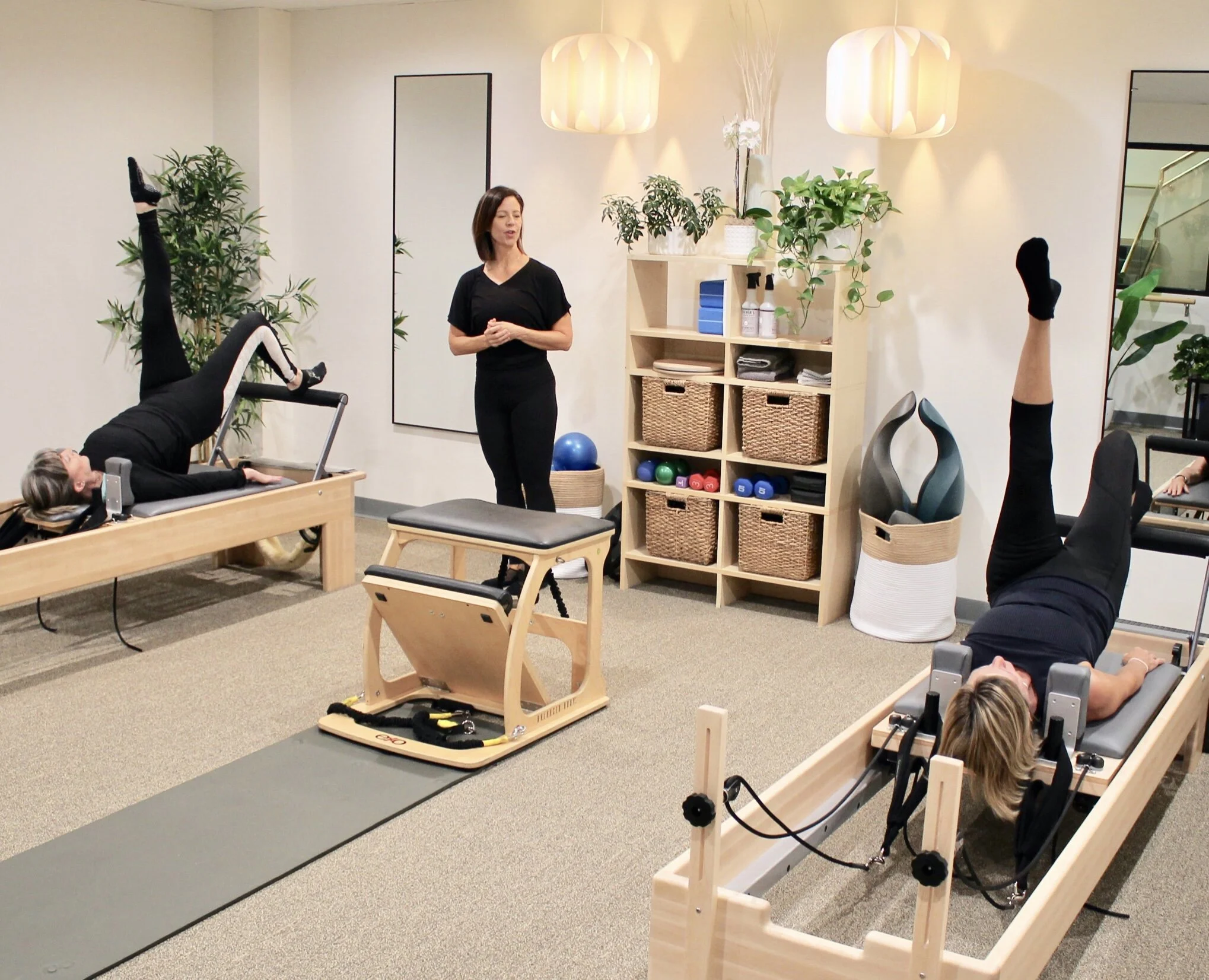
Equipment-based instruction is a major component of today’s Pilates education. This is where reform training becomes super valuable. During reform training, students learn to teach exercises using specialized equipment like the Reformer, Cadillac, and the Wunda Chair. These tools use spring resistance to support and challenge the body while improving strength, mobility, and control.
Instructors who complete reform training perfect their skills in:
Resistance-based movement programming
Postural correction
Rehabilitation-focused exercise modification
Progressive strength development
Many studios offer their clients a full schedule of equipment classes, making reform training essential for potential teachers. At Sandy Greiner Pilates, clients train on a full range of professional equipment in private andsemi-private classes, including reformers, chairs, towers, and barrels, supporting personalized sessions for all abilities.
What Makes a Great Pilates Instructor?
Education and credentials are important, but great teaching also requires interpersonal and observational skills. A successful Pilates instructor combines technical expertise with strong communication and empathy.
Key qualities include:
Attention to alignment and form
Ability to tailor exercises for individuals
Clear verbal instruction
Strong knowledge of biomechanics
Commitment to lifelong learning
Professional Pilates instructor training emphasizes these competencies because every client’s body and goals are unique.
Why Certification Matters for Pilates Clients
From a client perspective, working with a certified professional offers several benefits. Choosing a qualified Pilates instructor ensures:
Safer workouts and reduced injury risk
Customized programming
Better results through proper technique
Evidence-based movement strategies
At Sandy Greiner Pilates, instructors utilize their Pilates certification to personalize sessions and focus closely on biomechanics and alignment to help clients achieve strength, flexibility, and mobility safely.
Certifications at Sandy Greiner Pilates
A major strength that sets Sandy Greiner Pilates above other studios is its emphasis on professional credentials and comprehensive education among its stellar teaching team. The studio encourages instructors to pursue or maintain the Nationally Certified Pilates Teacher credential, reflecting excellence in assessment, evaluation, and teaching practices.
The team includes experienced instructors such as:
Sandy Greiner, NCPT (owner and lead instructor)
Emily Rudman
Erin Duffy
Jennifer Lande
KT Williams
Julie Coan
Kady Lang
Michelle Gross, NCPT
Tami Farrell
At Sandy Greiner Pilates, our focus on high standards guarantees all our clients receive consistent, professional guidance during every class they take.
Pilates Studio Owner Sandy Greiner
Pilates studio owner Sandy Greiner brings decades of experience and extensive education to her teaching approach.
She holds a 500-hour Balanced Body Pilates instructor certification and is certified through the Pilates Method Alliance, demonstrating advanced professional training. Her background includes study with major Pilates education systems such as Polestar, Stott, BASI, Balanced Body, and Fletcher Pilates, along with training in Iyengar yoga.
With over 20 years of teaching experience, Sandy specializes in:
Athletic conditioning
Pre- and postnatal training
Rehabilitation support
Condition-specific Pilates programming
Her expertise shapes the studio’s educational philosophy and commitment to comprehensive Pilates instructor training standards.
Is Pilates Instructor Training Right for You?
If you’re passionate about movement, health, and helping others, Pilates instructor training can be a rewarding path. It requires dedication, study, and consistent practice, but the result is a meaningful career centered on improving lives through movement.
Training programs and a recognized Pilates instructor certification ensure instructors can teach responsibly and effectively while building long-term professional credibility.

From Student to Skilled Professional
The transition from Pilates student to earning your Pilates certification is both challenging and rewarding. Through structured education, hands-on experience, and comprehensive Pilates instructor training, aspiring teachers develop the knowledge and confidence needed to guide others safely.
Pilates studios like Sandy Greiner Pilates demonstrate how rigorous education and professional standards create exceptional teaching environments. Their commitment to Pilates certification, ongoing learning, and expert instruction ensures clients receive high-quality training and personalized care.
If you’re inspired by Pilates and want to share its benefits with others, the journey from student to Pilates certification begins with the right education, strong mentorship, and a passion for movement. To get started, book yourfirst session today!
