
How Pilates Supports Emotional Balance, Mental Clarity, and Nervous System Health
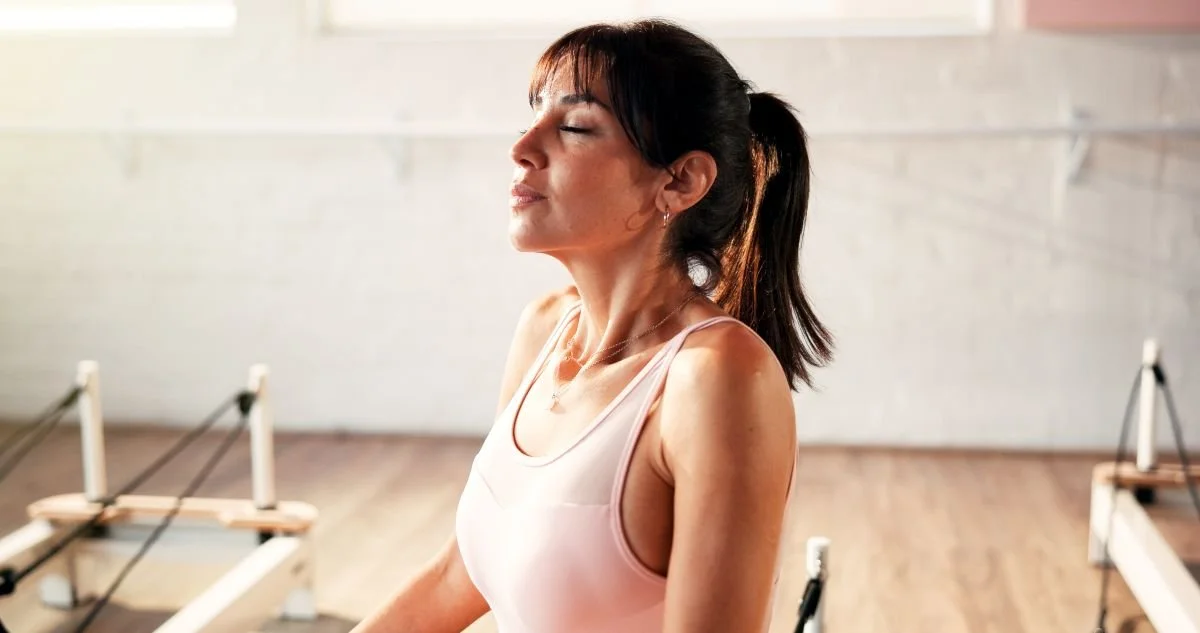
Most people start Pilates because they want to build strength, improve flexibility, or reduce aches and pains. What many don't expect is how much better they feel mentally after class.
You may arrive carrying the stress of a busy workday, a packed schedule, or a mind that's racing in a dozen different directions. Then, somewhere between focusing on your breath and moving through a series of controlled exercises, things begin to settle. Your shoulders relax. Your thoughts slow down. You feel more present.
While Pilates is often celebrated for its physical benefits, many people discover that some of the most meaningful changes happen beyond the muscles. The combination of mindful movement, intentional breathing, and focused concentration can help support emotional balance, reduce everyday stress, and create a stronger connection between the mind and body.
In this article, we'll explore the mind-body benefits of Pilates, how Pilates breathing techniques may support relaxation, the connection between Pilates and mindfulness, and why so many people find that a regular Pilates practice leaves them feeling calmer, clearer, and more balanced.
The Mind-Body Connection in Pilates
Joseph Pilates originally described his method as a way to develop both the body and the mind. Unlike workouts that encourage you to push through repetitions on autopilot, Pilates requires concentration.
Every movement is performed with intention. You're paying attention to your breathing, alignment, posture, and how your body moves through space. This focus naturally draws your attention away from daily stressors and into the present moment.
For many people, Pilates becomes one of the few times during the day when they're fully focused on what they're doing rather than worrying about what's next.
This may sound simple, but it's increasingly rare in everyday life. Many of us spend our days multitasking, scrolling through notifications, or mentally jumping from one responsibility to the next. Pilates creates a space where your attention has somewhere specific to go.
When you're concentrating on your breath, engaging your core, or maintaining proper alignment, there's less room for mental clutter. That doesn't mean stress magically disappears, but it often becomes easier to set aside for an hour. Many clients say their Pilates session feels like a reset button, allowing them to step away from distractions and return to their day with a clearer mind.
How Pilates Breathing Techniques Help Reduce Stress
Breathing is a fundamental part of every Pilates session. Rather than holding your breath or breathing shallowly, Pilates encourages controlled, intentional breathing patterns that work in coordination with movement. Coordinating breath with movement can improve body awareness while promoting a greater sense of relaxation.
When we're stressed, we often take shorter, shallower breaths. Over time, this can contribute to feelings of tension and overwhelm. Pilates breathing techniques encourage slower, more mindful breathing, which can help calm the nervous system and create a greater sense of ease during and after exercise.
It's one reason many clients leave class feeling refreshed and mentally clear, even after a challenging workout.
Does Pilates Reduce Stress?
Many people searching for "does Pilates reduce stress?" are looking for a workout that helps them feel better both physically and mentally.
While Pilates isn't a treatment for stress, many practitioners find that it helps them manage everyday pressures more effectively. The combination of movement, breathing, concentration, and mindfulness creates an opportunity to step away from distractions and reconnect with the present moment.
Unlike high-intensity workouts that can sometimes leave you feeling depleted, Pilates often leaves people feeling energized, centered, and better equipped to handle the rest of their day.
Part of that experience comes from being fully engaged in the practice. When you're focused on your breath, alignment, and movement patterns, your attention naturally shifts away from emails, deadlines, and other daily stressors. Even a single Pilates session can provide a valuable mental break, allowing you to reset and return to your responsibilities with a greater sense of clarity and focus.
Pilates for Anxiety and Everyday Mental Wellness
One reason Pilates can feel so grounding is that it encourages you to focus on what your body is doing right now. When anxiety takes hold, thoughts often drift toward future worries and "what if" scenarios. Pilates gently redirects attention back to movement, breath, and body awareness.
Many clients describe Pilates as a moving form of mindfulness. Rather than sitting still and trying to quiet the mind, you're using movement as a way to stay present and engaged.
Over time, this practice of returning your attention to the present moment can become a valuable tool for navigating everyday stress and anxiety.
The Mental Health Benefits of Consistent Pilates Practice
Like many forms of exercise, Pilates can contribute to overall mental well-being when practiced regularly.
Beyond the physical benefits, consistent Pilates practice may help:
Promote relaxation
Improve body awareness
Encourage mindfulness
Support healthy stress management
Boost confidence through improved strength and mobility
Create a sense of routine and self-care
These benefits often build gradually. Many clients find that the positive effects extend beyond the studio and into other areas of daily life.
How Pilates Supports Nervous System Health
The nervous system plays a central role in how we respond to stress, process information, and move through the world. Unfortunately, modern life often keeps us in a constant state of stimulation. Emails arrive, phones buzz, and to-do lists seem endless.
Pilates offers an opportunity to slow down and reconnect with your body through intentional movement and breathing. Many clients notice that they leave class feeling calmer, more focused, and less physically tense.
Some of the ways Pilates may support overall nervous system health include:
Encouraging slower, more mindful breathing
Promoting greater body awareness
Providing a break from daily distractions
Creating opportunities for focused movement and concentration
While Pilates isn't designed to treat nervous system disorders, it can be a valuable part of a wellness routine that supports balance, relaxation, and overall well-being.
Why Pilates Feels Different From Other Workouts
Not all exercise creates the same experience. Many workouts emphasize speed, intensity, or competition. Pilates takes a different approach. The focus is on quality of movement rather than quantity, encouraging you to move with control, awareness, and purpose.
That emphasis on mindful movement is one reason Pilates has remained popular for generations. It's not just about building a stronger body. It's about creating a stronger connection between mind and body as well.
Many people find that Pilates gives them something they don't often experience during a typical workout: the opportunity to slow down and pay attention. Instead of rushing through a series of exercises, you're encouraged to notice how you move, breathe, and feel from one moment to the next. For some, that shift in focus can be just as valuable as the physical benefits of the workout itself.
Finding Balance Through Movement
In a world that rarely slows down, Pilates offers an opportunity to pause, breathe, and reconnect with yourself.
While many people initially come to Pilates for its physical benefits, they often discover that the practice supports much more than strength and flexibility. Through mindful movement, intentional breathing, focused concentration, and increased body awareness, Pilates can help create a stronger connection between the mind and body. For many, that translates into feeling calmer, more centered, and better equipped to navigate everyday stress.
Whether you're interested in the benefits of Pilates for overall wellness, curious about Pilates breathing techniques, or exploring how Pilates and mindfulness work together, the practice provides a unique opportunity to care for both your physical and mental well-being.
At Sandy Greiner Pilates, we see this every day. Clients often arrive looking to improve posture, mobility, or core strength, only to discover an added benefit: leaving class feeling more relaxed, focused, and balanced than when they walked in. Over time, those moments of mindful movement can become an important part of a healthy, sustainable wellness routine.
Frequently Asked Questions (FAQs)
Does Pilates reduce stress?
Many people find that Pilates helps reduce everyday stress by combining mindful movement, controlled breathing, and focused concentration. While it isn't a treatment for stress, it can be a valuable part of a healthy wellness routine.
Is Pilates good for anxiety?
Pilates encourages present-moment awareness through movement and breath, which many people find calming and grounding. It may help support overall emotional well-being and stress management.
What are the mental health benefits of Pilates?
Some commonly reported Pilates mental health benefits include improved focus, increased body awareness, reduced feelings of tension, enhanced mindfulness, and a greater sense of overall well-being.
What breathing techniques are used in Pilates?
Pilates uses controlled breathing patterns that coordinate with movement. These breathing techniques help improve concentration, support efficient movement, and encourage relaxation.
Is Pilates considered a mind-body exercise?
Yes. Pilates is often described as a mind-body exercise because it combines physical movement with concentration, breathing, and body awareness, creating a more mindful approach to fitness.
